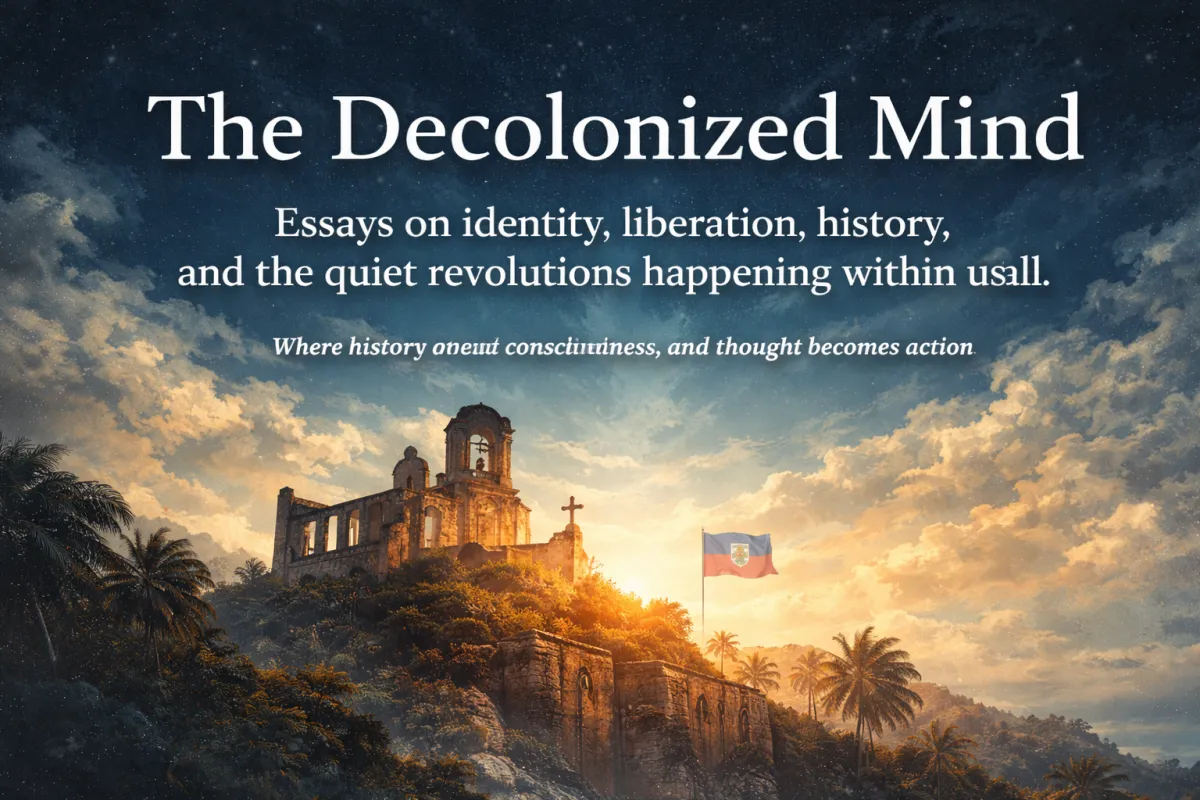
Why Decolonizing the Mind Is the Most Urgent Work of Our Time
Why Decolonizing the Mind Is the Most Urgent Work of Our Time
For a long time, I believed that freedom was something granted by circumstance—by laws, by borders, by political change. I believed that once a people gained independence, the work of liberation was complete. History, however, tells a different story. So does lived experience.
Colonization did not end when the flags came down. It adapted. It moved quietly into classrooms, churches, languages, and traditions. It learned how to live in the mind.
I know this because I lived it.
I was born in Haiti, the first Black republic in the world—a nation forged by enslaved people who dared to imagine themselves free. Yet I was raised, like so many descendants of the colonized, within belief systems and narratives that were never chosen by my ancestors, only inherited under force. I was taught to see salvation, morality, and truth through frameworks introduced during enslavement and maintained long after emancipation.
This is not a personal failure. It is a historical one.
Decolonizing the mind is not about rejecting everything we were taught. It is about asking a far more dangerous question: Who taught us to believe this—and why?
When belief is inherited without consent, it becomes control. When language is ranked, culture is policed, and faith is weaponized, identity itself becomes a battleground. Colonization succeeds not when it conquers land, but when it convinces the conquered that they are incomplete without the colonizer’s worldview.
That is the most enduring violence of all.
For years, I believed love could only come from God, that morality required faith, that questioning these ideas was itself a moral failure. When I finally allowed myself to question—not out of rebellion, but out of honesty—I discovered something unsettling and liberating at the same time: much of what I believed had little to do with truth and everything to do with history.
And history matters.
Decolonization of the mind does not ask us to abandon meaning. It asks us to reclaim authorship. To decide, consciously and courageously, what we believe, why we believe it, and whether it truly serves our humanity.
This work is uncomfortable by design. It disrupts certainty. It unsettles inherited identities. It challenges the idea that tradition is always sacred simply because it is old. But discomfort has always been the birthplace of transformation.
Haiti’s revolution did not happen because enslaved people were comfortable. It happened because they refused to accept the psychological limits imposed upon them. They imagined themselves free before freedom was visible. That act of imagination was itself an act of decolonization.
Today, the struggle looks different—but it is no less urgent.
We live in a world where formerly colonized nations pray for divine intervention while remaining trapped in systems designed to fail them. Where language still determines perceived intelligence. Where proximity to Europe is mistaken for progress. Where mental liberation is treated as heresy.
I write because silence is complicity.
This website, my books, and my work exist for one reason: to create space for honest inquiry. Not answers handed down from authority, but questions born of dignity. Questions that allow us to separate faith from fear, culture from control, and identity from domination.
Decolonization of the mind is not about anger. It is about clarity.
It is about remembering that we were thinkers before we were conquered. Creators before we were renamed. Whole before we were told we were broken.
The revolution does not begin with violence.
It begins with awareness.
And awareness, once awakened, refuses to be enslaved again.
